Introduction
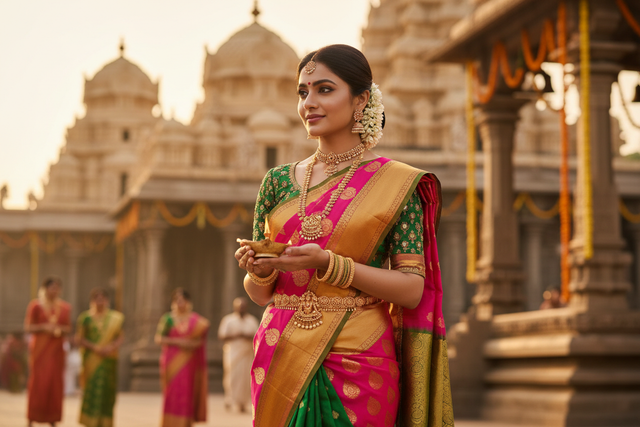
If there is one element that defines the grandeur of a Kanchipuram silk saree, it is the zari. That shimmering gold or silver thread woven into the fabric is not merely decorative — it is a centuries-old craft tradition that transforms silk into something truly extraordinary. But what exactly is zari, and how do you know if you're getting the real thing?
Let's unravel the golden thread.
What Is Zari?
Zari is a type of thread made from fine metallic yarn, traditionally crafted from real silver wire coated with gold. It is used in weaving, embroidery, and brocade work across Indian textiles. In the context of Kanchipuram sarees, zari is woven directly into the silk fabric to create borders, pallus, and body motifs.
Types of Zari Used in Kanchipuram Sarees
1. Pure Zari (Real Zari)
Pure zari is made from a core of silk thread wrapped with flattened silver wire and then coated with gold. It is:
- The most expensive and prestigious type
- Heavier than other varieties
- Highly lustrous with a warm golden glow
- Tarnish-resistant when stored properly
- Certified by the Bureau of Indian Standards (BIS)
2. Half-Fine Zari
A blend of real and synthetic materials, half-fine zari offers:
- A more affordable price point
- Lighter weight, making the saree easier to wear
- Good lustre, though slightly less brilliant than pure zari
- Suitable for everyday occasions and gifting
3. Tested Zari
Tested zari uses a copper core instead of silver, coated with gold. It is the most economical option and is commonly found in mass-produced sarees.
How to Identify Pure Zari
Spotting genuine zari requires a trained eye, but here are some practical tips:
- Burn test: Pure zari leaves behind a metallic residue when burned; synthetic zari melts or turns to ash
- Rub test: Rub the zari on a white cloth — pure zari may leave a faint gold mark; synthetic zari leaves colour
- Weight: Pure zari sarees feel noticeably heavier
- Certification: Look for the BIS hallmark or Silk Mark on the saree
Zari Motifs in Kanchipuram Sarees
The artistry of zari work in Kanchipuram sarees is expressed through a rich vocabulary of motifs:
- Peacock (Mayil): Symbol of grace and beauty, commonly seen in bridal sarees
- Temple (Kovil): Inspired by South Indian temple architecture, used in borders
- Mango (Paisley): A classic motif representing fertility and prosperity
- Checks (Kattam): Geometric patterns created by contrasting zari and silk threads
- Floral (Poo): Delicate flower patterns woven across the body of the saree
Caring for Zari Work
To preserve the lustre and longevity of your zari saree:
- Store in a cool, dry place wrapped in muslin or cotton cloth
- Avoid plastic covers — they trap moisture and tarnish zari
- Dry clean only; never machine wash
- Air the saree occasionally to prevent moisture buildup
- Fold differently each time to avoid permanent crease lines on the zari
Conclusion
Zari is the soul of a Kanchipuram silk saree. Understanding the difference between pure, half-fine, and tested zari empowers you to make an informed purchase and truly appreciate the craftsmanship behind every thread. At ARRS Silks, we source only the finest zari-woven Kanchipuram sarees, ensuring that every piece you own is a work of art.
Explore our collection of pure zari Kanchipuram sarees at ARRS Silks.